Back Pain: Finding the Root Cause Matters More Than Searching for a Spinal Stenosis Specialist
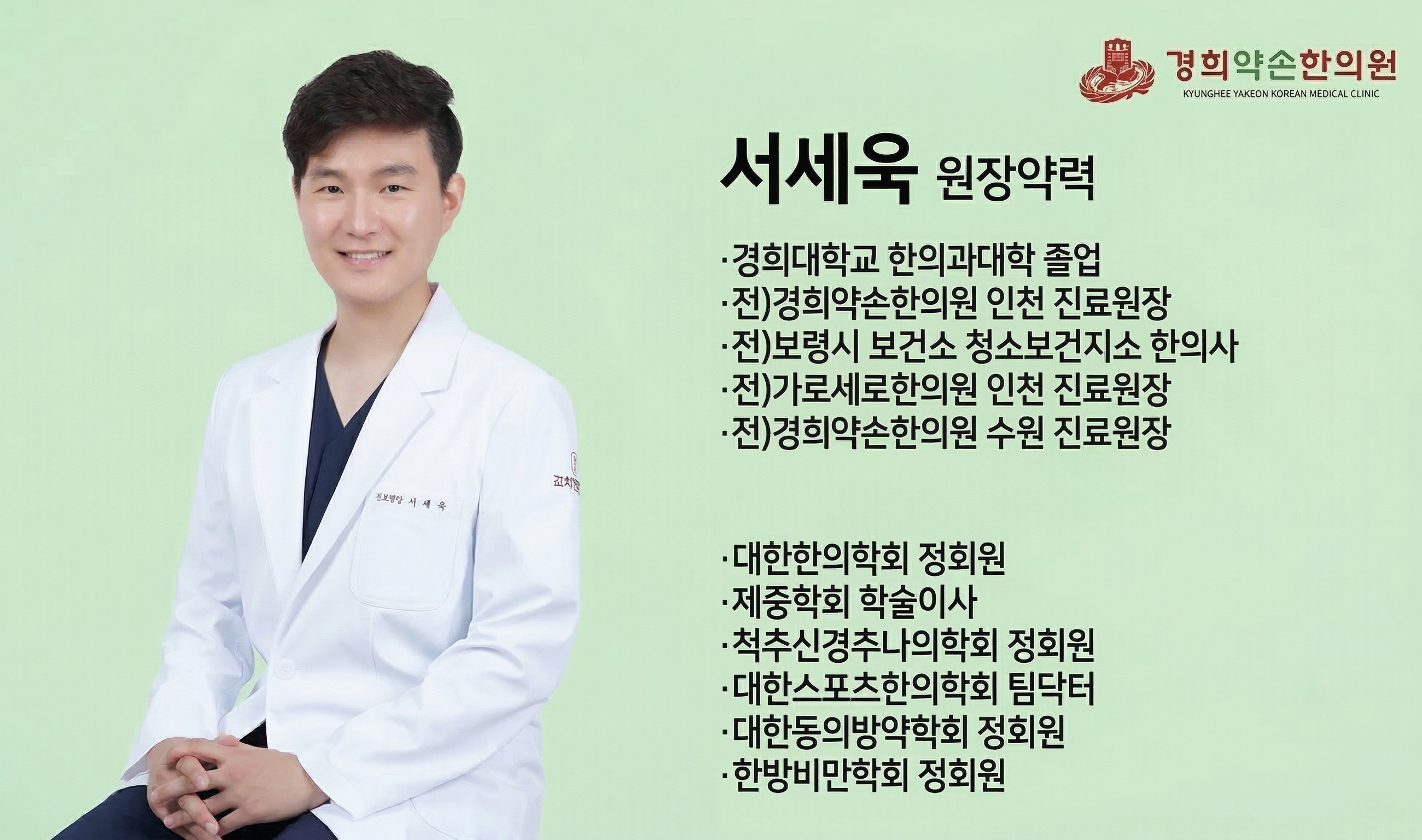
Hello. I'm a Korean medicine doctor who has been caring for patients' back health for over 10 years.
In my practice I meet a truly wide variety of patients with back pain.
It weighs especially heavily on my heart when elderly patients shuffle in leaning on a cane, their backs bent.
So many of them tell me, "Doctor, my legs feel like they're going to burst after just five minutes of walking. I have to stop and rest."
A great number of these patients arrive already diagnosed with 'spinal stenosis.' And they usually ask the same thing: "Isn't there a spinal stenosis specialist somewhere? Is surgery really the only answer?" How could I not understand that desperate feeling? You've probably scoured the internet night after night looking for a spinal stenosis specialist and researched every treatment said to be effective. But what I've come to feel over more than 10 years of treating patients is that there is something more important than finding a famous person or hospital. It's grasping the underlying cause — 'why has my back become so weak?' — and building a treatment plan to match.
[Spinal stenosis: why does it keep recurring and getting worse?]
Spinal stenosis is often compared to 'a water pipe that has rusted and narrowed.' In our spine there is a passage through which the nerves travel (the spinal canal). As we age, the surrounding ligaments, bones, and discs degenerate and thicken, narrowing this passage. So the nerves get compressed, and even a little walking makes the legs tingle and ache and the sensation grow dull.
Many people think, "Ah, so I just need to widen the narrowed area!" That isn't wrong, of course. That's why some consider surgical methods that directly widen the narrowed area. But here's the thing — the heartbreaking cases I've seen in my practice are patients who suffered when pain recurred even after surgery, or when stenosis developed at another segment. It was truly disheartening.
Why does this happen? Think about it for a moment. Why did the water pipe rust in the first place? Simply because it got old? That is one cause, of course, but it may also be because the wall supporting the pipe or the surrounding structures weakened and kept putting strain on it. Our spine is the same. If you only widen the narrowed area while leaving the underlying cause untouched — that is, the weakened muscles and ligaments around the spine that narrowed the canal — there's a high chance the problem will return before long. It's a bit like repeatedly rebuilding a house on sand.

[Before searching for a spinal stenosis specialist, you must first check your back's 'strength']
That's why I approach it from a slightly different angle. "Most people focus on the stenotic area, but in my experience, building the strength that supports the spine came first."
In Korean medicine, the lower back is described by the phrase 'the kidney governs the bones (腎主骨),' meaning that the strength of the bones and the musculoskeletal frame is closely tied to the function of the organ system called 'the kidney (腎).' Rather than viewing it merely as a problem of bones and muscles, we understand it as the body's overall energy and vital fluids — its energy — becoming depleted, so that the very strength to support the spine has weakened.
I'm reminded of a gentleman in his 70s whom I once treated. He repeatedly had to sit down before he could walk even 100 meters, and although several hospitals had recommended surgery, he felt it was too much of a burden at his age. I told him, "Sir, widening the narrowed area right now matters too, but it seems even more important to build up the strength for your back to support itself. Let's first try treatment that strengthens and reinforces your back."
Honestly, at first he was skeptical. "Now, they tell me the bone has grown and narrowed the space — can building strength really widen it?" A natural doubt. But along with acupuncture treatment to strengthen the weakened muscles and ligaments, I steadily prescribed herbal medicine to reinforce the bones and cartilage and to aid the circulation of qi and blood. Then, after about three months, he beamed and said, "Doctor, now I can walk 20 minutes without resting." Of course, the narrowed spinal canal probably did not widen dramatically. But as the structures around his back grew stronger, he gained the strength to overcome the pressure on the nerves on his own. This is the very heart of the concept I emphasize — 'treating stenosis by strengthening the back.'
[You should think about treatment that prevents recurrence, not just simple pain relief]
What I mean is that, rather than wandering in search of a spinal stenosis specialist, it is wiser to find a place that can accurately diagnose your body's condition and address the 'cause of the pain.'
1. Does it look only at where it hurts?: Treating only the painful area may be a stopgap measure. It's good to choose a place that looks at the whole body in an integrated way and builds a treatment plan — examining why the muscles and ligaments around the back weakened, and whether there is overall loss of vitality or a circulation disorder.
2. Does it build up the back's own strength?: Along with treatment that reduces pain, treatment that reinforces the weakened spine and builds its strength to support itself must go hand in hand, so that you can prevent recurrence and keep a healthy back for a long time.
3. Does it even manage the patient's lifestyle habits?: As important as treatment is lifestyle management. A place that carefully guides you on which exercises are good, which postures to avoid, all tailored to the patient's daily patterns, is one you can trust more.
In the end, the goal of treating spinal stenosis must go beyond simply 'not hurting' to reclaiming 'the joy of walking on your own two legs wherever you wish to go.' And for that, the back must become strong.

[In closing: if you've lost your way, first unfold the map]
When I see the many people suffering from back pain, I often feel sorry, as if they were lost and wandering on a rough mountain trail. Searching for a spinal stenosis specialist can be like searching for the most famous mountaineer on this mountain. But before that mountaineer arrives, isn't it far more important to know exactly where you are right now and what the condition of your body (the map) is?
Don't despair too much just because the pain is severe and walking is hard. Surgery may not be the only path. Why not trust your body's capacity to recover and take an interest in fundamental treatment that builds up your weakened back's strength? Rather than agonizing alone, I recommend seeking the help of a specialist with whom you can accurately assess your body's condition and together set the right direction for treatment.
[Frequently Asked Questions about Spinal Stenosis Q&A]
Q1: How does a Korean medicine clinic treat spinal stenosis?
A1: Rather than focusing solely on the narrowed spinal canal, a Korean medicine clinic places its emphasis on finding and resolving the underlying cause that triggered the stenosis. First, through acupuncture, moxibustion, cupping, and the like, we release the knotted muscles around the spine and improve the circulation of qi and blood to reduce pain. At the same time, we prescribe herbal medicine suited to the patient's constitution and physical condition, and carry out treatment that strengthens the weakened bones, ligaments, and muscles and raises the body's overall capacity to recover. This can help not only with pain relief but also with preventing recurrence.
Q2: Can I just follow any exercise said to be good for spinal stenosis?
A2: Absolutely not. Exercise is very important for patients with spinal stenosis, but depending on the severity of symptoms and one's individual condition, it can actually be harmful. For example, exercises that bend the back backward can narrow the spinal canal further and worsen the pain. In general, exercises that put little strain on the back — such as walking, indoor cycling, or swimming — are recommended, but even these should begin within a pain-free range. The safest course is to consult a specialist and have an exercise method and intensity suited to your body prescribed.
Q3: How long after starting treatment can I expect to see results?
A3: This is a question I'm asked very often, and to be honest, it varies greatly from person to person and according to the depth of the symptoms. Because spinal stenosis is a degenerative disease that has progressed over a long period, its treatment likewise requires consistency and time. Acute pain can be relieved relatively quickly, but fundamental improvements — such as strengthening the weakened spinal structure and increasing walking distance — can take several months or more. Rather than being impatient, it's important to steadily combine treatment and management with the mindset of making your body healthy again.