Tennis elbow symptoms and treatment: 5 things you must know right now
If the outer side of the elbow has a sharp ache and you feel pain when lifting objects or turning a door handle,
you can suspect 'tennis elbow.' Many people misunderstand it as a condition that only happens to athletes,
but in reality it frequently appears in ordinary people, office workers, and homemakers who use their arms and wrists repeatedly.
If you do not receive appropriate treatment early, it can develop into chronic pain and cause great inconvenience in daily life. In this article, we will look together at the exact symptoms of tennis elbow and its treatment in Korean medicine, as well as the possibility of recovery through real treatment cases.
1. What is tennis elbow?

'Tennis elbow' is medically called lateral epicondylitis. It is a condition in which repeated use of the wrist and elbow causes micro-damage to accumulate in the tendon on the outer side of the elbow, leading to inflammation and pain.
It frequently occurs in tennis, golf, occupations that involve frequently lifting heavy objects, or office workers who often use a computer mouse.
Any repetitive task that uses the wrist is a risk factor.
2. The 5 main symptoms of tennis elbow
1. Sharp pain on the outer side of the elbow
2. The pain worsens when bending the wrist backward
3. Loss of strength when lifting objects or holding a cup
4. Pain when twisting the hand or turning a doorknob
5. Tenderness when pressing the area (it hurts when pressed)
The pain is characteristically worse with use and is temporarily relieved with rest.
3. Self-diagnosis and clinic diagnosis methods
Self-diagnosis method (Cozen's Test)
If you make a fist and bend the wrist backward, and pain is provoked when resistance is applied, the likelihood of tennis elbow increases
When severe pain is felt upon pressing the bone on the outer side of the elbow

Diagnosis method at a Korean medicine clinic
Pulse examination, tenderness examination
Checking the movement of the arm joint
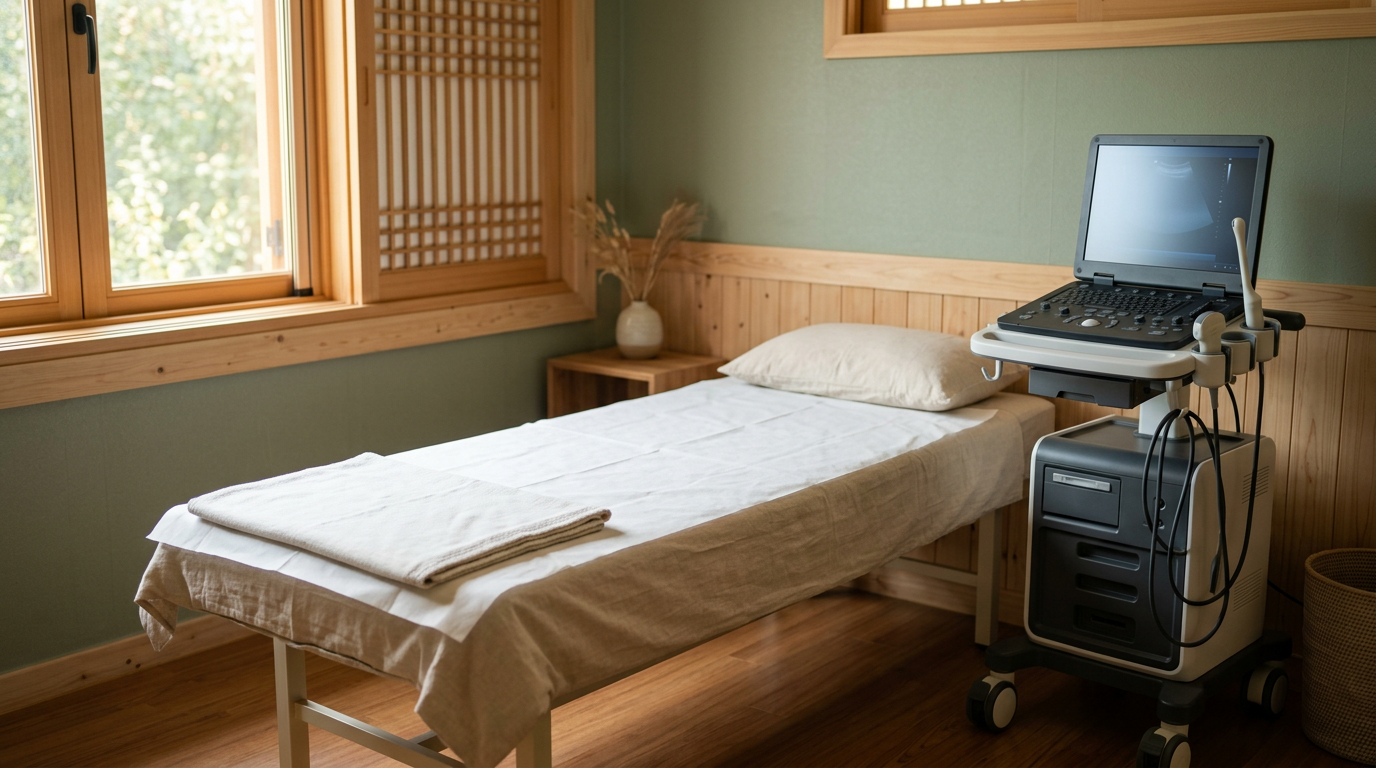
Confirming inflammation, tears, calcification, etc. through ultrasound diagnosis and setting the exact treatment point

4. Treatment in Korean medicine – centered on acupuncture, cupping, and pharmacopuncture
Acupuncture treatment
Needle stimulation at acupuncture points on the outer side of the elbow
Relaxes tense muscles and promotes blood flow to the inflamed area to relieve pain
Cupping treatment
Removes blood stasis and aids tissue recovery
Expels fatigue substances and inflammation-inducing substances produced by repetitive wrist use
Pharmacopuncture treatment
Injection of herbal medicine components that have anti-inflammatory and tissue-regenerating effects
Pain relief + shortened recovery time
Ultrasound-guided pharmacopuncture
After confirming the acupuncture points at the inflamed area with ultrasound, the pharmacopuncture is injected precisely
Increases the accuracy of the procedure and the treatment effect
Expert insight: the side effects of steroid injections
Many people say they "got better right away" after a steroid injection,
but in actual clinical practice, it is not uncommon for tendons, ligaments, and cartilage to weaken due to repeated injections.
For example, there is a report that patients who received steroid injections 3 or more times a year for shoulder pain had a 2 to 3 times higher risk of rotator cuff damage.
Yoo YS, Park JY, Choi CH, Cho NS, Cho CH, Lim TG, Sim SD, Rhie TY, Lee HW, Jung JH, Lee YB. Serial magnetic resonance imaging to determine the progression of neglected recalcitrant rotator cuff tears: a retrospective multicenter study. Clin Shoulder Elb 2017;20:133-137.
Because temporary relief of pain can lead to long-term damage,
a Korean medicine treatment that restores the tissue is a safer and more fundamental approach.
5. Two real cases
▶ Case 1: A woman in her 30s who developed tennis elbow while raising a child
Ms. A (34, homemaker) frequently held her child and developed elbow pain from repetitive wrist use such as washing dishes and cleaning.
→ Acupuncture + pharmacopuncture + cupping combined
→ Pain decreased in week 2, and daily movements were without strain in week 4
▶ Case 2: An office worker in his 40s whose condition worsened from mouse use
Mr. B (41, office worker) used a mouse for more than 10 hours a day. The pain intensified when clicking.
→ 3 weeks of ultrasound-guided pharmacopuncture treatment
→ Pain relieved by more than 70%, combined with education on stretching to prevent recurrence

Closing
Tennis elbow is not simply elbow pain.
If you do not receive appropriate treatment early, it leads to chronic pain and recovery can take a long time.
Korean medicine treatments such as acupuncture, cupping, and pharmacopuncture are safe methods that relieve pain while aiding tissue recovery.
Do not ignore recurring pain; we recommend visiting a nearby Korean medicine clinic to receive an accurate diagnosis and personalized treatment.